WH1 and Leyendieker’s Former Friendship, Rivalry, and Estrangement
Der goldene HandschuhWH 1 and Gerhard Leyendieker’s history gives a public act of forgiveness the shape of a private defeat. Once friends, then rivals, they become estranged for decades; when Leyendieker finally approaches WH 1 with an offer of reconciliation, WH 1 neither welcomes nor accepts it. The ceremony meant to restore his standing instead confronts him with a version of peace he has not chosen, while the speech he has prepared to answer it remains unspoken.
From Friendship to Estrangement
WH 1 and Leyendieker were born in 1895, attended the same school, and were once friends. Their closeness did not survive the passage of time: friendship gave way to competition, and competition eventually to a complete break. The account offers no single incident as the cause. Instead, it describes a relationship that has narrowed, stage by stage, until Leyendieker considers WH 1 irrelevant to him, while WH 1 directs all the hatred he can muster toward his former friend.
That imbalance matters. Leyendieker can regard the old connection as finished; WH 1 remains bound to it through resentment. Their later encounter is therefore not simply a reunion between two men of the same generation. For one, the past is something to be put aside in a gesture of magnanimity. For the other, it remains active, preserved in grievances and plans for revenge.
WH 2’s Attempt at Reconciliation
The effort to rehabilitate WH 1 is arranged by WH 2, who wants the decision to become an official, unanimous act of absolution. He has spent nearly a year lobbying the relevant decision-makers, and Leyendieker is the last person he needs to persuade. The effort is not only a matter of public standing: facing the approaching collapse of the family business, WH 2 wants to do something good for his father and bring about peace before his father’s life ends. He is surprised by his own newly felt solidarity and near-pity for a man long deprived of much and still punished for old mistakes.
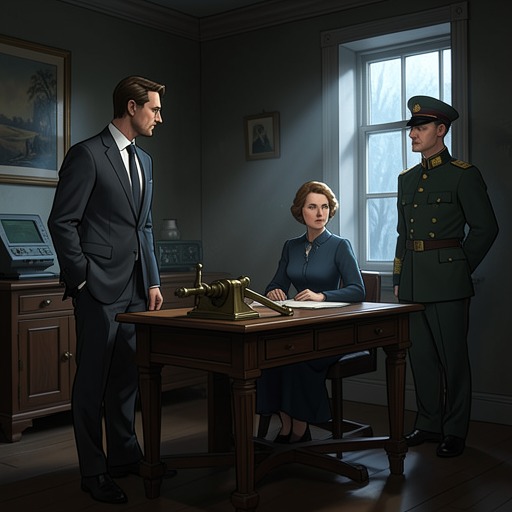
Leyendieker’s agreement comes in a private conversation. After Bertram Theissen, the chairman of Hapag-Lloyd, leaves, WH 2 finally has his turn. Leyendieker says he agrees, presents the moment as a time to bury the hatchet, and speaks in general terms about forgiveness and the possibility of atoning for wrongdoing. He appears to enjoy his role as a generous, mild-hearted arbiter of peace. The setting gives his decision the air of a settlement between senior figures, but it does not establish that WH 1 shares the desire for settlement—or has even been told about it.
The two men arrange for Leyendieker to deliver the news at WH 1’s upcoming eightieth birthday. WH 2 deliberately keeps his father uninformed until five minutes before noon on the day, leaving no time for him to protest. The surprise is intended to prevent resistance; it also ensures that WH 1 has no opportunity to prepare for the public meaning others have already assigned to his history with Leyendieker.
The Birthday Ceremony
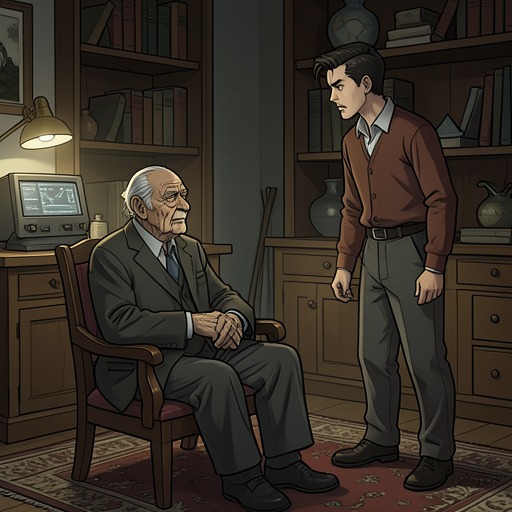
WH 1 is the only person present who does not know that his rehabilitation is about to be announced. The gathering includes prominent guests and even the interior senator. When his son finally explains the purpose of the occasion, WH 1 sees Leyendieker again after a quarter of a century. His expression is described as requiring a new word: he feels neither reconciled nor honored, and he feels no gratitude. What is presented as a grand gesture of release lands, in his perception, like a slap in the face.
The speech that leads to the announcement makes the mismatch more pronounced. Leyendieker delivers a familiar, standardized address about Hamburg’s port, its infrastructure and hinterland connections, the traditions of Hanseatic commerce, globalization, and the first container terminal at Burchardkai. He also invokes the tanker built in Hamburg for Aristotle Onassis and inserts jokes, before turning at last to the birthday guest’s supposed life’s work. Because there is little to say about WH 1’s postwar career, the praise carries an uncomfortable implication about the earlier period the speech avoids addressing directly.
Leyendieker ends with a joke and takes WH 1’s hand in a grip that is too solemn, too warm, and too prolonged. The narration makes the gesture double-edged: what could look like ceremonial affection also functions as an act of subjugation. The public performance therefore does not erase the old conflict. It places WH 1 inside a reconciliation staged by others, with Leyendieker controlling the words and timing and WH 1 expected to receive the result.
The Unspoken Counterattack
WH 1 has rehearsed a very different response a thousand times. He intends to begin with maritime affairs, condemning the registration of ships under foreign flags as a betrayal of Germany. He plans to expose allegedly dirty deals and illegal business conducted around Café Lausen and Susi’s Show Bar, including the use of brothel visits to celebrate commercial agreements. From those public accusations, he means to turn to personal denunciations of the assembled people, including members of his family. In his imagined ending, the reckoning would last for hours or even days, and his enemies might kill him afterward.
None of it comes out. The narration reduces the moment to a succession of physical and mental exhaustion: old, paralyzed, groggy, knocked out, finished. WH 1 has waited too long. His silence is not presented as agreement with Leyendieker’s judgment or acceptance of forgiveness; it is the collapse of a response he has prepared but can no longer deliver. The attempt to reconcile the two men thus ends without mutual recognition. WH 2 can secure the public rehabilitation he hoped to give his father, but he cannot make that gesture into the reconciliation his father refuses—or is no longer able—to perform.